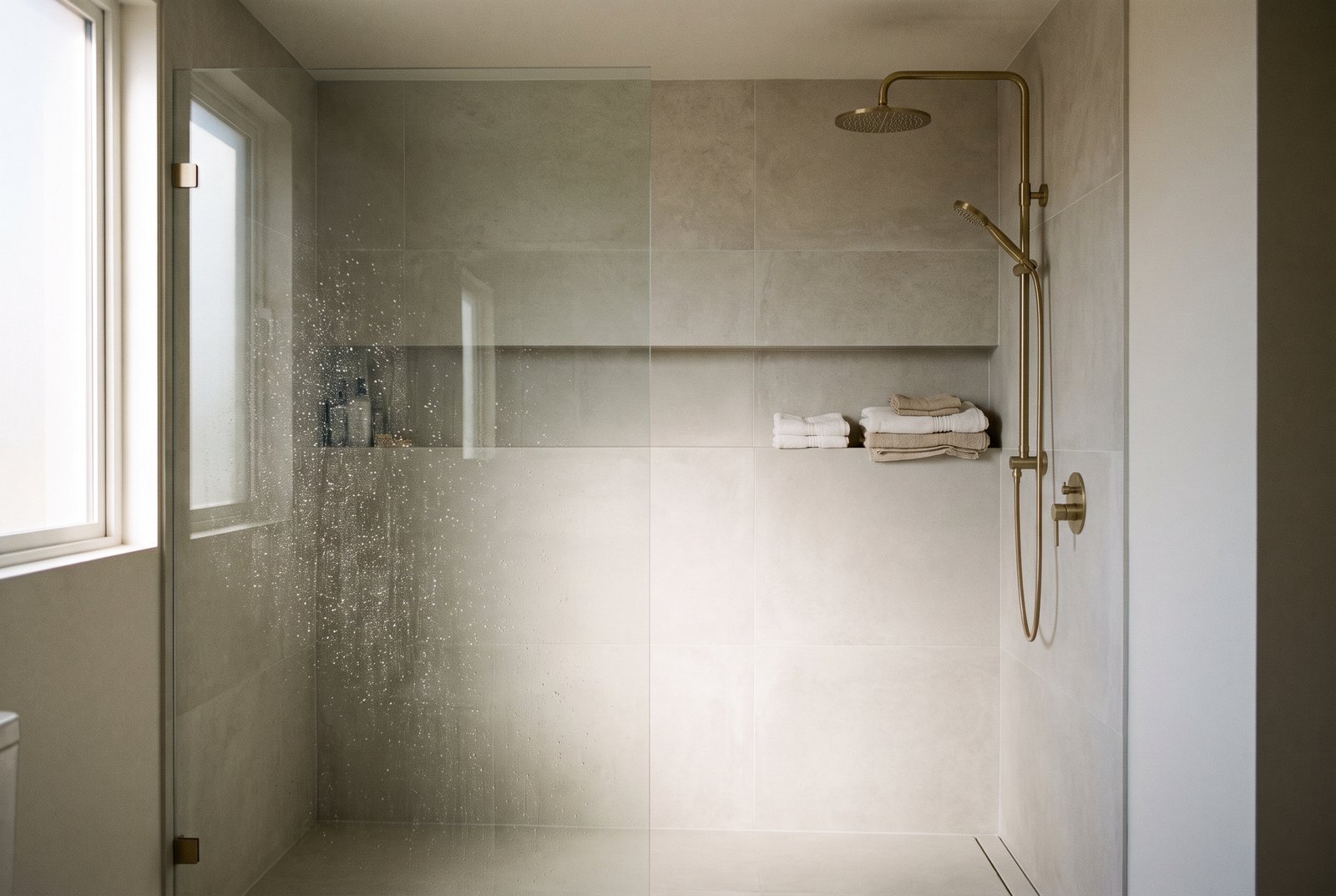
A conversion is more than removing a tub. Drain location, waterproofing, niche placement, and glass clearance decide whether the new shower feels intentional.
Look beyond the finished tile. Water management, valve placement, and access to cleaning are the decisions that determine whether a beautiful shower stays pleasant to use. That is why the strongest remodeling decisions are specific: they describe a problem, name a constraint, and choose a solution that can be built and maintained.
Start with the room you have
Before comparing finishes or collecting price ranges, document what happens in the existing space. Take photos from the doorway, note appliance and fixture locations, and write down where people pause, reach, or collide. Include details that tend to disappear in a quick walkthrough: a window that limits upper cabinets, a floor transition, a bulky mixer, a towel drawer that never closes, or a shower door that opens into the wrong path.
This small inventory changes the conversation. Instead of asking for a generic “upgrade,” you can ask whether a particular layout, material, or storage choice solves the exact frustration. It also gives a remodeling team the information needed to identify work that affects the budget—electrical, plumbing, ventilation, framing, or subfloor preparation—before those items become surprises.
Make the decisions in the right order
There is a dependable sequence to this kind of work. First settle the function and dimensions. Then choose the fixed components that control the room: cabinetry, fixtures, appliances, or the shower footprint. Surfaces, lighting, hardware, and paint follow. Reversing that order is how a favorite finish ends up driving a layout that does not work.
Ask each choice to earn itself. Does it improve access, durability, cleaning, storage, comfort, or a sightline you value? If the answer is only that it is popular right now, it may still be a good choice—but it deserves a lower place in the budget than the items that change how the room operates.
Protect the budget from late changes
Most expensive change orders are not caused by taste. They happen when an unknown condition is uncovered or when a decision is delayed until it interrupts work. A useful proposal explains what is included, what is an allowance, what assumptions it relies on, and what would change the price. Keep a modest contingency for the walls and floors you have not opened yet, but do not use contingency as a substitute for planning.
When you review options, compare total scope—not just a single material line. A lower initial number can omit prep, electrical, waterproofing, installation details, or coordination that will be necessary later. Clear scope is easier to evaluate than a long promise.
Bring the right questions to your consultation
Ask what the team would measure, which details need to be chosen before ordering, and how the schedule handles the handoff between trades. Ask where they see risk in the room. A thoughtful answer is usually concrete: a drain route, a window height, a cabinet lead time, or a floor transition. It should not be a vague assurance that everything will work out.
If you are weighing several versions of the project, say so. A good design-build conversation can help you distinguish the version that genuinely improves the room from the version that simply adds cost. The best finished spaces feel natural because those trade-offs were made deliberately.
A practical next step
Use this guide as a starting point, then look at the choices in your own home. Indiana Kitchen & Bath offers in-home consultations across the north Indianapolis area, with a measured scope and a written proposal built around the room—not a generic package. Explore our showers services or request a free consultation when you are ready to talk through the details.